
Staring at a rough, stained pool shell that scrapes your feet every summer gets frustrating fast.
Resurfacing an average 10,000 to 20,000-gallon pool in Florida typically costs between $4,500 and $12,500.
Your final bill depends heavily on the interior finish you pick, structural prep work, and local labor rates.
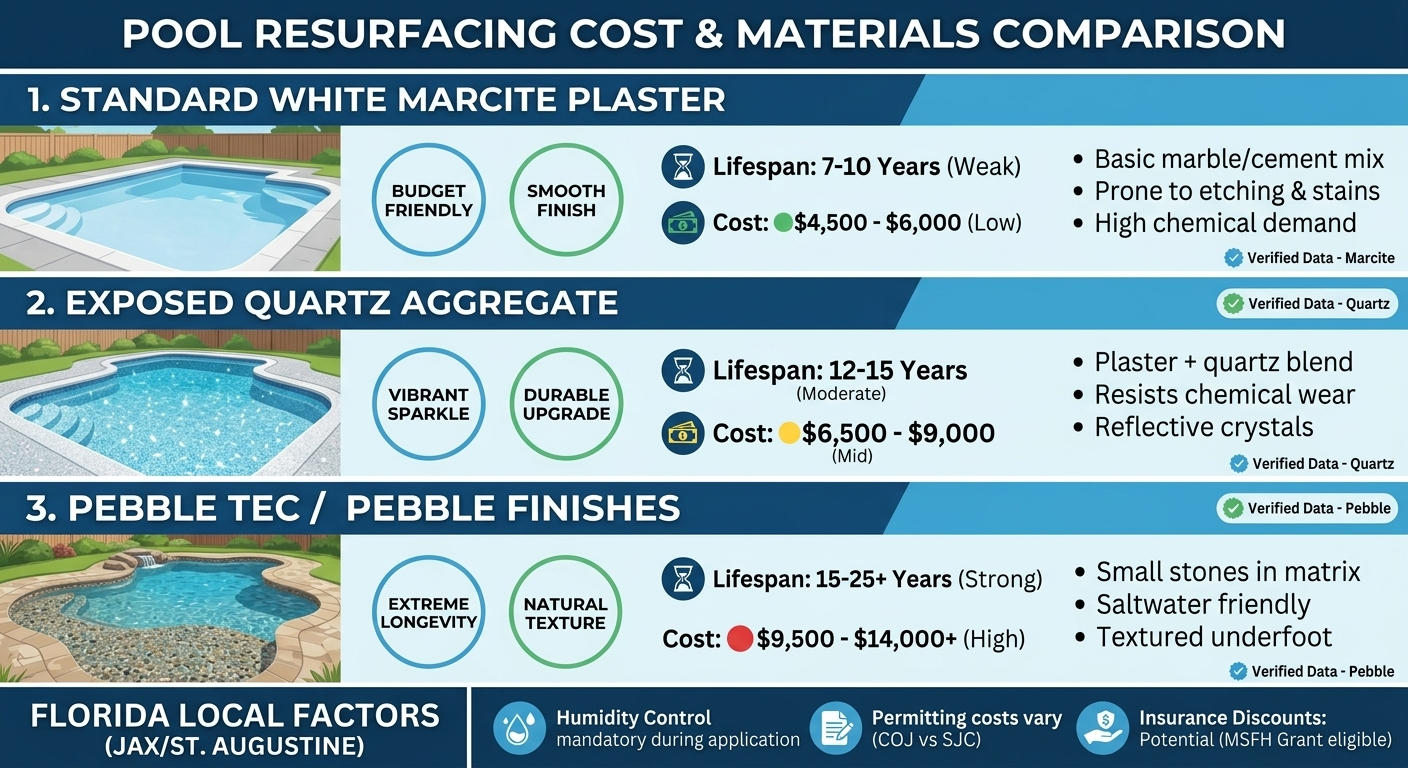
What Is the Average Cost to Resurface a Pool in Florida?
In Florida, the average pool resurfacing project costs $6,500 for a standard 15,000-gallon pool. Basic white marcite starts around $4,000, while premium pebble finishes and custom glass tile exceed $14,000.
Florida's intense sun, high humidity, and heavy rain wear down pool finishes much faster than in northern states.
Water chemistry shifts quickly in summer heat, dissolving weak plaster layers over time.
Most pool owners start seeing surface pitting, flaking, or dark algae stains after 7 to 12 years.
When you budget for this job, square footage of the pool interior matters far more than just surface water area.
A deep 8-foot pool requires significantly more plaster and prep labor than a flat 4-foot play pool.
Average Resurfacing Cost by Material
The material you choose impacts both upfront installation costs and long-term durability.
Here is how popular pool finishes stack up across Florida pool renovations:
| Finish Material | Average Cost (15,000 Gal Pool) | Expected Lifespan | Surface Texture | Maintenance Level |
|---|---|---|---|---|
| Standard White Marcite | $3,800 – $5,500 | 7 – 10 Years | Very Smooth | High |
| Exposed Quartz Aggregate | $5,200 – $7,800 | 10 – 15 Years | Smooth to Light Texture | Moderate |
| Pebble Tec / Pebble Finish | $7,500 – $11,500 | 15 – 25+ Years | Medium to Bumpy Texture | Low |
| Polished Marble Aggregate | $6,000 – $8,500 | 12 – 15 Years | Ultra-Smooth | Moderate |
| Full Glass / Porcelain Tile | $15,000 – $30,000+ | 25+ Years | Smooth | Low |
Marcite Pool Resurfacing Cost Breakdown
Marcite pool resurfacing costs between $3,500 and $5,500 for a standard residential pool. It remains the most budget-friendly pool plaster material, averaging $4 to $6 per square foot of interior surface.
Marcite is a classic blend of white Portland cement and marble dust.
It gives your pool that sleek, bright cyan water look at an accessible price point.
However, marcite is vulnerable to chemical imbalances and etching from acidic water.
If you run a saltwater system or struggle with pool chemistry, marcite degrades faster.
Expect to re-plaster a marcite pool every 7 to 10 years in Florida.
Quartz Aggregate Finishes: The Middle Ground
Quartz aggregate pool finishes cost between $5,000 and $8,000 on average. Quartz offers a durable upgrade over marcite by blending natural quartz crystals with modified cement.
Adding quartz crystals increases resistance to staining, etching, and harsh chemicals.
The crystals also reflect sunlight, giving your water a vibrant, shimmering sparkle.
Quartz surfaces last roughly 12 to 15 years with basic maintenance.
It strikes an ideal balance between affordability and longevity for Florida homeowners.
Pebble Tec & Exposed Aggregate Finishes
Pebble pool resurfacing costs range from $7,500 to $12,000 depending on pebble size and color mix. Small river pebbles embedded in plaster create an extremely durable, chemical-resistant barrier.
Pebble finishes easily withstand salt systems and intense UV exposure.
They hold up remarkably well, often lasting 20 years or longer without structural wear.
The primary trade-off is texture underfoot.
Larger pebbles feel like walking on a natural stream bed, which some swimmers find rough on toes.
Opting for micro-pebble or polished pebble products smooths out the surface while keeping the structural strength.
Hidden Costs and Extra Renovations
Rarely does a pool contractor just show up and pour fresh plaster.
Existing damage and outdated pool hardware often add unexpected line items to your estimate.
Here are common extras you should factor into your overall budget:
- Hydro-Demo or Chip-Out Labor: $1,200 – $2,500 (Removing old flaking plaster layers down to bare gunite).
- Pool Tile Replacement (Waterline Tile): $1,200 – $3,000 ($15 to $30 per linear foot).
- Coping Repair or Replacement: $1,500 – $4,000 ($25 to $50 per linear foot).
- Crack Injections & Structural Epoxy: $500 – $1,800.
- Main Drain & Return Jet Code Upgrades: $300 – $800 (VGB compliance safety covers).
If your old plaster is chipping or peeling in sheets, a full bond-coat prep or chip-out is mandatory.
Applying new plaster over failing old material causes early delamination and voids manufacturer warranties.
Regional Labor Rates: Pool Resurfacing in Jacksonville, FL
Pool resurfacing in Jacksonville costs between $5,000 and $10,500 for typical single-family homes. Local labor, disposal fees, and humidity conditions during application influence regional pricing across Duval and St. Johns counties.
If you live near the coast in Atlantic Beach or Ponte Vedra, salt air and coastal groundwater tables complicate drainage.
Contractors must run hydrostatic relief valves during the drain-and-prep phase to prevent pool popping.
For a detailed breakdown tailored to local Duval County contractor pricing, check out our Jacksonville Pool Resurfacing Cost Calculator.
Getting quotes from licensed local pool contractors ensures your project includes proper permitting through the city.
How Long Does the Resurfacing Process Take?
A complete pool resurfacing project takes 4 to 7 working days from draining to refilling. Weather delays, tile replacement, and material curing times can extend this timeline.
The resurfacing workflow follows a strict sequence:
- Drainage (Day 1): Pumping water out safely into municipal drain access points.
- Prep Work & Chip-Out (Days 2–3): Undercutting tile line, stripping loose plaster, and applying a sticky bond coat.
- Plaster & Finish Application (Day 4): Hand-troweling the chosen marcite, quartz, or pebble finish.
- Acid Wash or Exposure (Day 5): Washing away top cement paste to expose aggregate (for quartz/pebble).
- Refill & Start-Up Chemicals (Days 5–7): Refilling immediately to allow plaster to cure underwater under constant chemical balance.
Never leave an empty concrete pool sitting exposed in wet summer ground.
Hydrostatic pressure beneath the shell can lift an empty pool straight out of the soil.
How to Save Money on Your Pool Resurfacing Project
You do not have to cut corners on quality to protect your bank account.
Smart planning saves thousands on pool renovations:
- Schedule in Fall or Winter: Florida pool contractors face lower demand from November through February and frequently offer off-season discounts.
- Keep Existing Waterline Tile: If your perimeter tile is firmly attached and crack-free, clean and re-grout it instead of replacing it.
- Maintain Water Chemistry Post-Install: Aggressive low-pH water ruins fresh plaster in under 12 months. Test your water weekly.
- Compare Multiple Quotes: Gather at least three itemized estimates from certified, insured pool contractors.
FAQ Section
How do I know if my pool needs resurfacing or just a deep clean?
If your pool surface feels like coarse sandpaper, leaves white chalky residue on your skin, or shows exposed grey concrete patches, it requires resurfacing. Stains that resist acid washing also indicate that the protective top layer has worn away completely.
Can you resurface a pool yourself?
Resurfacing a concrete pool is not a DIY-friendly project. Mixing, troweling, and timing plaster exposure before it dries requires specialized pumps, crew coordination, and years of trade experience. Improvised plastering usually leads to rapid delamination and costly professional repairs.
How soon can you swim after resurfacing a pool?
You must wait until the pool is completely refilled and the water chemistry is fully balanced—typically 5 to 7 days after plastering. During the first 14 days, you must brush the pool walls twice daily to remove plaster dust without using automatic vacuum cleaners.