
If you own a home in Florida that is 10 to 15 years old—or if you are shopping for a new property across major hubs like Jacksonville, Orlando, Tampa, or South Florida—your insurance carrier will almost certainly require a 4-Point Inspection before issuing or renewing your policy.
Along with the Florida Wind-Mitigation Inspection Guide, a 4-point inspection is one of the most critical documents in Florida real estate. Failing this inspection can lead to immediate policy non-renewal, sky-high forced-place insurance rates, or dropped coverage by carriers such as Citizens Property Insurance.
For baseline project pricing and replacement estimates if your systems need upgrades, explore our complete cost calculator directory.
What is a Florida 4-Point Inspection?
A 4-point inspection is a focused physical evaluation of a home’s four core structural and mechanical systems. Unlike a comprehensive home buyer’s inspection (which covers dozens of items from appliances to grading), an insurance 4-point inspection looks exclusively at the condition, age, and remaining lifespan of:
- Roofing System
- Electrical System
- Plumbing System
- HVAC (Heating, Ventilation, and Air Conditioning) System
Insurance underwriters use this report to measure the risk of water damage, electrical fires, and catastrophic mechanical failures.
- Average Cost: $75 to $150 (frequently discounted when bundled with a wind-mitigation inspection)
- Inspection Time: 30 to 50 minutes on-site
- Required Age Threshold: Most major Florida admitted carriers mandate a 4-point inspection for homes aged 10 to 15 years or older.
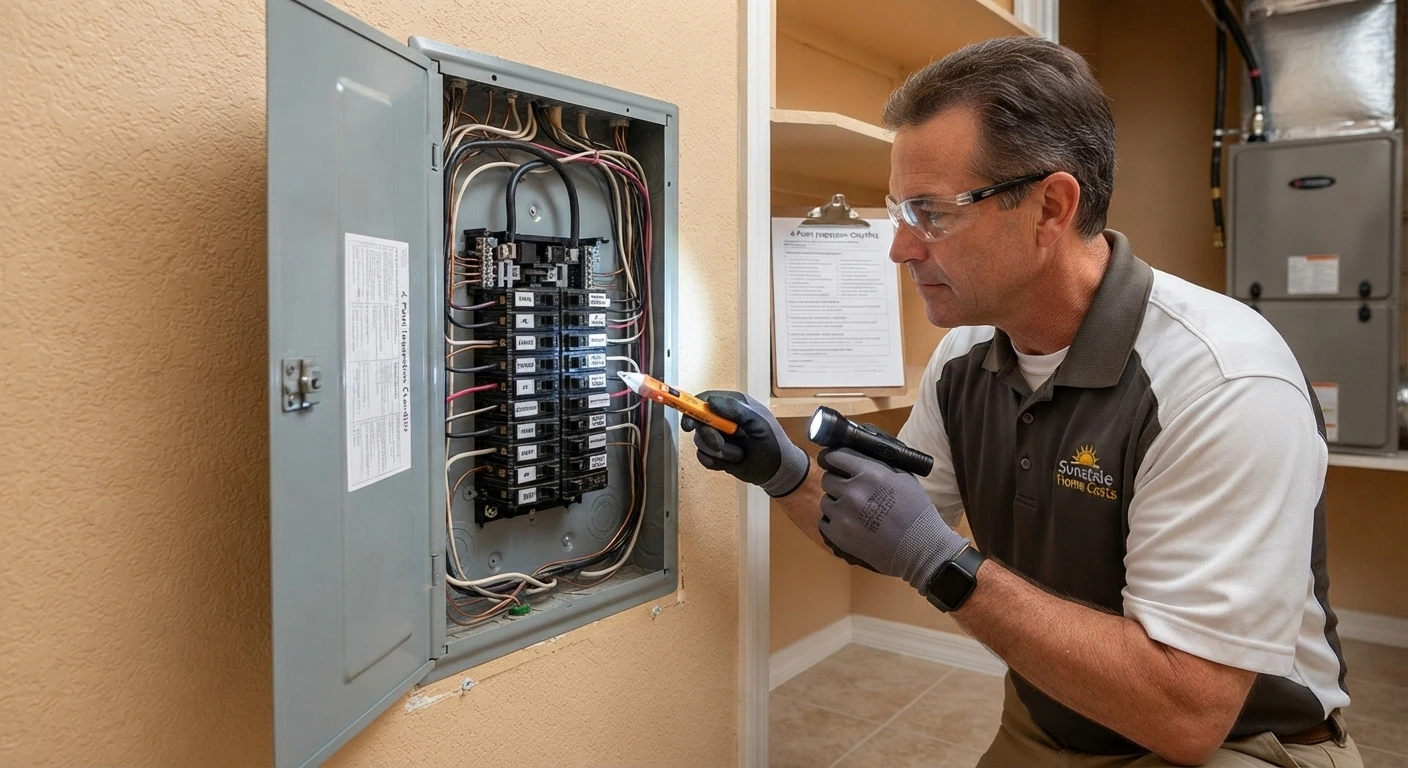
The 4 Core Systems Evaluated
1. Roofing System
Underwriters scrutinize the roof to ensure there are no active leaks, missing shingles, or structural sagging.
- What inspectors check: The age of the roof covering, remaining material lifespan, signs of granular loss, and interior water stains on ceilings.
- The Risk: If a shingle roof is over 15 years old or a tile/metal roof is over 20-25 years old, carriers will usually deny coverage until a full replacement is completed. Review standard pricing models in our Roof Replacement Cost Guide.
2. Electrical System
Electrical hazards are a primary concern for property insurers due to fire risks, especially in mid-century Florida homes.
- What inspectors check: The main service panel brand, wiring type, circuit breaker condition, and presence of active knob-and-tube or aluminum branch wiring.
- The Risk: Outdated or recalled breaker panels (such as Federal Pacific Electric (FPE) or Zinsco panels) or ungrounded wiring will cause an automatic 4-point failure until an electrician replaces the panel.
3. Plumbing System
Water damage claims drive the highest volume of insurance losses in Florida, making plumbing integrity a critical checkpoint.
- What inspectors check: Pipe materials (copper, PVC, PEX, or polybutylene), water heater age, presence of active leaks, and supply line conditions.
- The Risk: Polybutylene supply piping (common in homes built between 1978 and 1995) or outdated cast iron drain lines showing degradation will fail inspection and require costly repiping.
4. HVAC System
Florida climate subjects air conditioning systems to heavy continuous use, making aging units a high liability for water overflow and breakdown.
- What inspectors check: The age and condition of the air handler and compressor, auxiliary drain pans, float switches, and supply ductwork.
- The Risk: HVAC units older than 12–15 years, or units lacking a secondary safety float switch to prevent ceiling leaks, often fail under strict underwriting guidelines. Check replacement options with our HVAC Replacement Cost Guide.
Florida Inspection Cost & Remediation Breakdown
Below is a regional and financial overview of inspection expenses versus typical remediation costs if a system fails:
| Inspection or System Component | Average Cost Range | Potential Impact / Requirement |
|---|---|---|
| Standalone 4-Point Inspection | $75 – $150 | Required for homes 10–15+ years old |
| Bundled (Wind-Mit + 4-Point) | $150 – $250 | Recommended money-saving inspection package |
| Electrical Panel Replacement | $1,800 – $3,500 | Required if FPE, Zinsco, or damaged |
| Water Heater Replacement | $1,200 – $2,500 | Required if unit exceeds 12–15 years of age |
| HVAC System Replacement | $6,000 – $12,000 | Required if unit is expired or non-functional |
Interactive Florida Cost & Repair Calculators
If your 4-point inspection flags a failing system that requires immediate replacement, use our free interactive calculators to estimate local costs in your area:
- Calculate total expenses with our Florida HVAC Replacement Cost Calculator.
- Estimate roofing updates using our Florida Roof Replacement Cost Calculator.
- View regional pricing across Jacksonville, Orlando, Tampa, and Miami in our complete Cost & Calculations Directory.
Strategic Tips to Pass Your 4-Point Inspection
- Service Your Equipment First: Have your HVAC unit serviced, clean out your electrical panel area so it is easily accessible, and fix any leaky faucet valves before the inspector arrives.
- Label Your Panel: Ensure all circuit breakers in your electrical main panel are clearly and neatly labeled.
- Hire a Licensed Professional: Ensure your inspector is a licensed Florida home inspector, building contractor, or structural engineer whose report will be fully accepted by major insurance underwriters. Contractors looking to partner with our directory can learn more on our For Contractors page.
Frequently Asked Questions (FAQ)
Can I fail a 4-point inspection?
Yes. If one of the four systems is past its useful life, shows active leaks, or presents a severe safety hazard (such as exposed wiring or a faulty electrical panel), the insurance company will reject the report until repairs or replacements are made.
Is a 4-point inspection the same as a wind-mitigation inspection?
No. A wind-mitigation inspection evaluates how well your home resists high winds (roof-to-wall clips, deck nailing, and shutters) to lower your hurricane premium. A 4-point inspection evaluates the general health of your roof, electrical, plumbing, and HVAC systems to ensure the home is insurable.
How long is a 4-point inspection report valid?
Most insurance carriers require a fresh 4-point inspection report if the home is renewing its policy and the previous report is older than 12 months.
Disclaimer: Sunstate Home Costs provides independent home improvement cost data and contractor insights. Pricing and code requirements vary based on municipal amendments and carrier underwriting guidelines. Always verify local building department guidelines and consult licensed inspectors before scheduling insurance inspections.