
Painting a house in Florida is not like painting a home anywhere else in the country.
Intense UV rays, high humidity, wind-driven rain, and salty coastal air will destroy a cheap paint job in less than three years.
If you want your exterior paint to last 10 to 15 years on Florida stucco, you need the right materials, proper surface preparation, and an understanding of local coastal building codes.
Here is what you can expect to pay, along with the technical steps required to protect your home.
How Much Does It Cost to Paint a House Exterior in Florida?
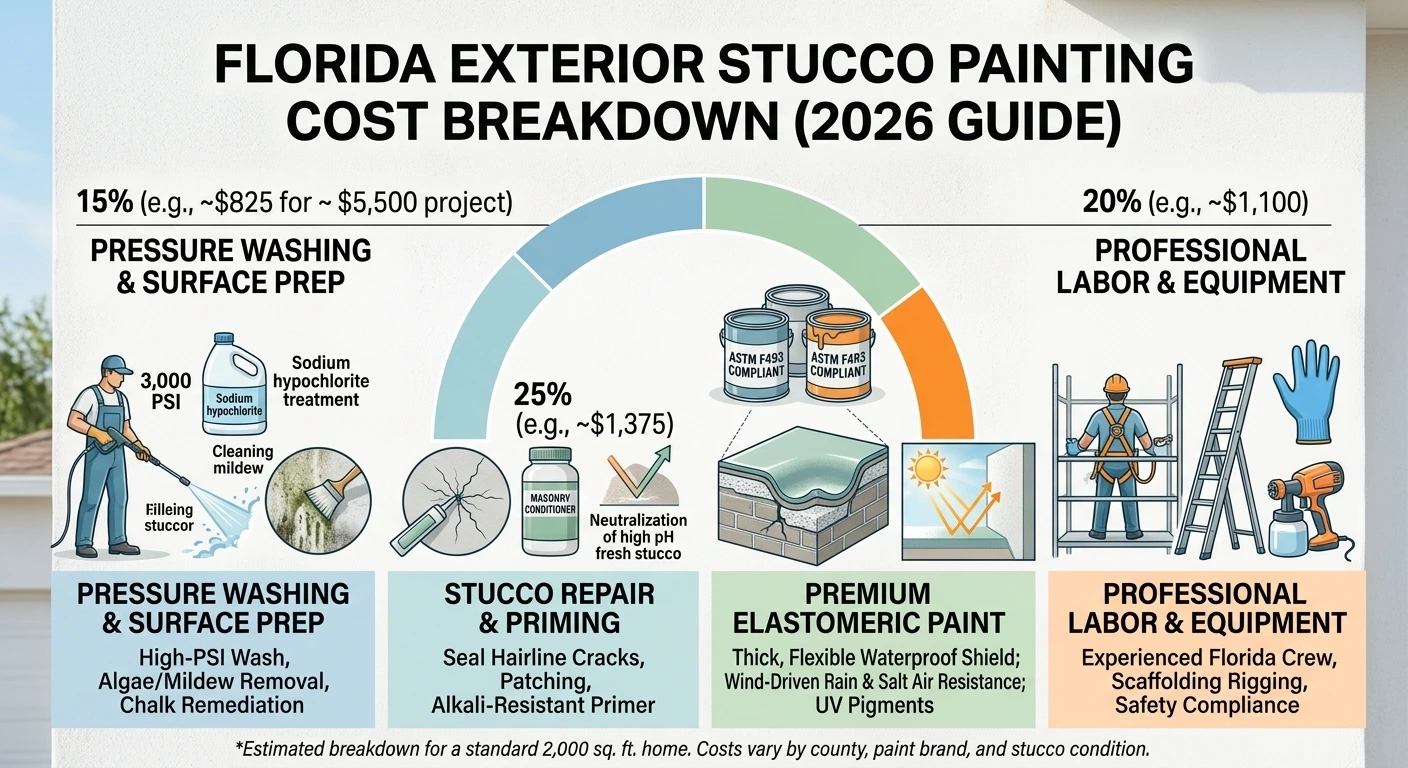
On average, painting a house exterior in Florida costs between $2.50 and $5.00 per square foot of wall surface area.
For a standard 2,000-square-foot home, total costs typically range from $3,800 to $7,500, depending on home height, stucco condition, paint quality, and local labor rates.
Exterior Painting Cost Breakdown by Home Size
The table below breaks down realistic cost ranges for single-story and two-story homes across Florida.
| Home Size (Sq. Ft.) | Stories | Estimated Wall Area (Sq. Ft.) | Average Total Cost Range |
|---|---|---|---|
| 1,500 sq. ft. | Single-Story | ~1,600 – 1,800 | $3,200 – $5,200 |
| 2,000 sq. ft. | Single-Story | ~2,100 – 2,400 | $3,800 – $6,500 |
| 2,500 sq. ft. | Two-Story | ~3,200 – 3,600 | $5,500 – $9,200 |
| 3,500+ sq. ft. | Two-Story / Coastal | ~4,200 – 5,000 | $8,000 – $14,000+ |
Two-story homes cost significantly more per square foot. Painters must use specialized rigging, ladders, and scaffolding to safely reach upper gables and soffits.
Why Florida Stucco Requires Special Surface Preparation
You cannot paint directly over Florida stucco without pressure washing, neutralizing high pH levels, and sealing existing hairline cracks.
Stucco is a porous, cement-based material. It expands and contracts constantly under the Florida sun, creating micro-fissures that absorb moisture during daily summer afternoon thunderstorms.
Stucco Preparation & Painting Steps
- High-PSI Pressure Washing: Remove chalk, mildew, and airborne salt deposits.
- Alkaline Test & Neutralization: Verify fresh stucco pH levels drop under 10.
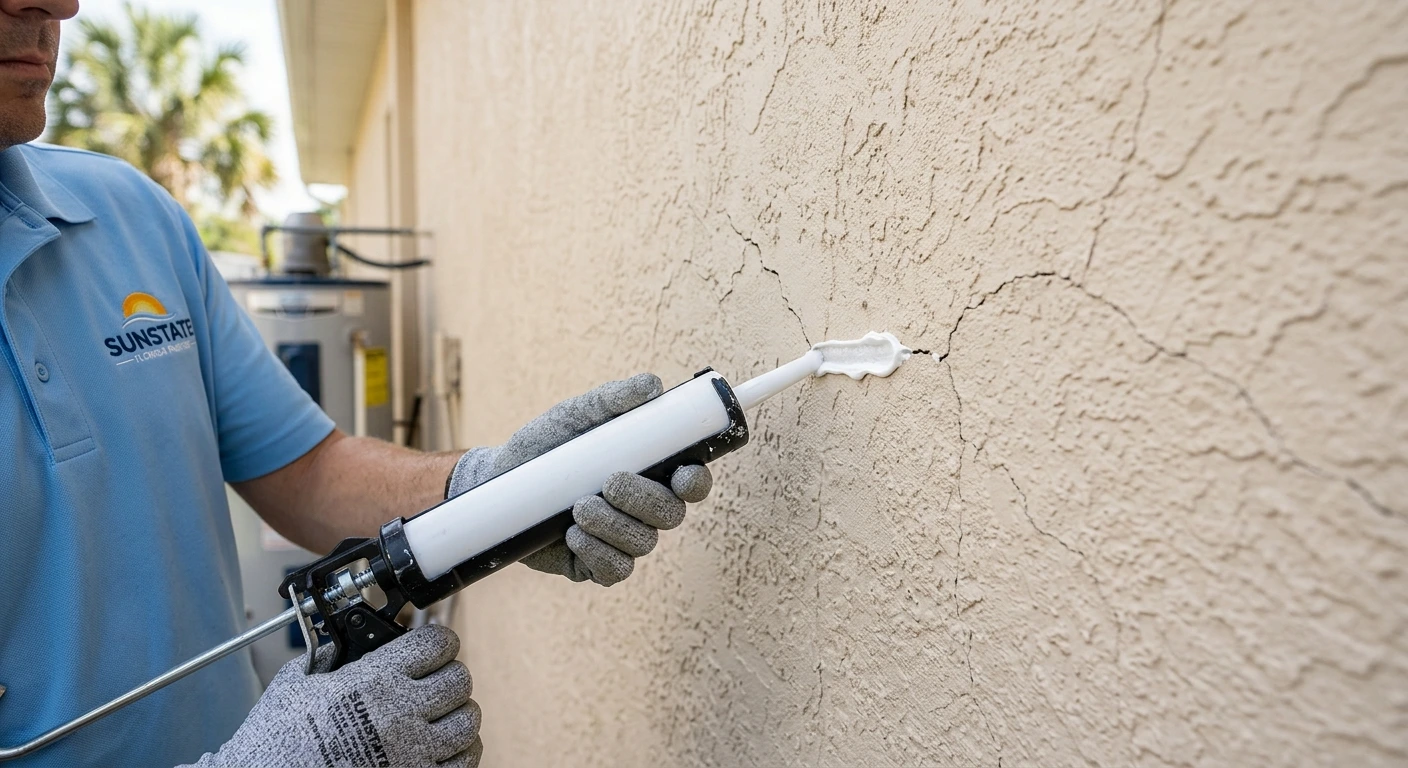
- Elastomeric Caulk & Patching: Seal hairline cracks and expansion control joints.
- Masonry Conditioner: Apply penetrating sealer to lock down loose cement dust.
- Dual-Coat Topcoat: Apply two full coats of 100% acrylic or elastomeric paint.
1. High-PSI Pressure Washing & Chlorine Treatment
Before a drop of primer touches the wall, workers must pressure wash the entire exterior at 2,500 to 3,000 PSI.
In humid coastal areas like Jacksonville Beach, Atlantic Beach, and Tampa Bay, contractors apply a diluted sodium hypochlorite (bleach) mixture to kill embedded algae, mildew, and airborne salt deposits.
Painting over unwashed chalky paint or active mildew will cause the new paint layer to peel within 12 to 18 months.
2. Sealing Hairline Cracks with Elastomeric Patching
Florida home foundations shift as soil moisture fluctuates. This movement creates hairline cracks across stucco walls.
Painters must open up larger cracks, clean out loose debris, and pack them with high-grade elastomeric caulking or textured stucco patch compounds. Standard painter's caulk is too rigid and will snap as the house continues to settle.
3. Alkali-Resistant Masonry Primers
New stucco patches have high alkalinity (pH levels above 10). High pH burns through standard latex paint, causing chalking and color fading known as efflorescence.
A dedicated masonry conditioner or penetrating alkali-resistant primer seals the raw stucco, balances pH levels, and glues down residual chalking so the topcoat adheres permanently.
Elastomeric Paint vs. 100% Acrylic Topcoats
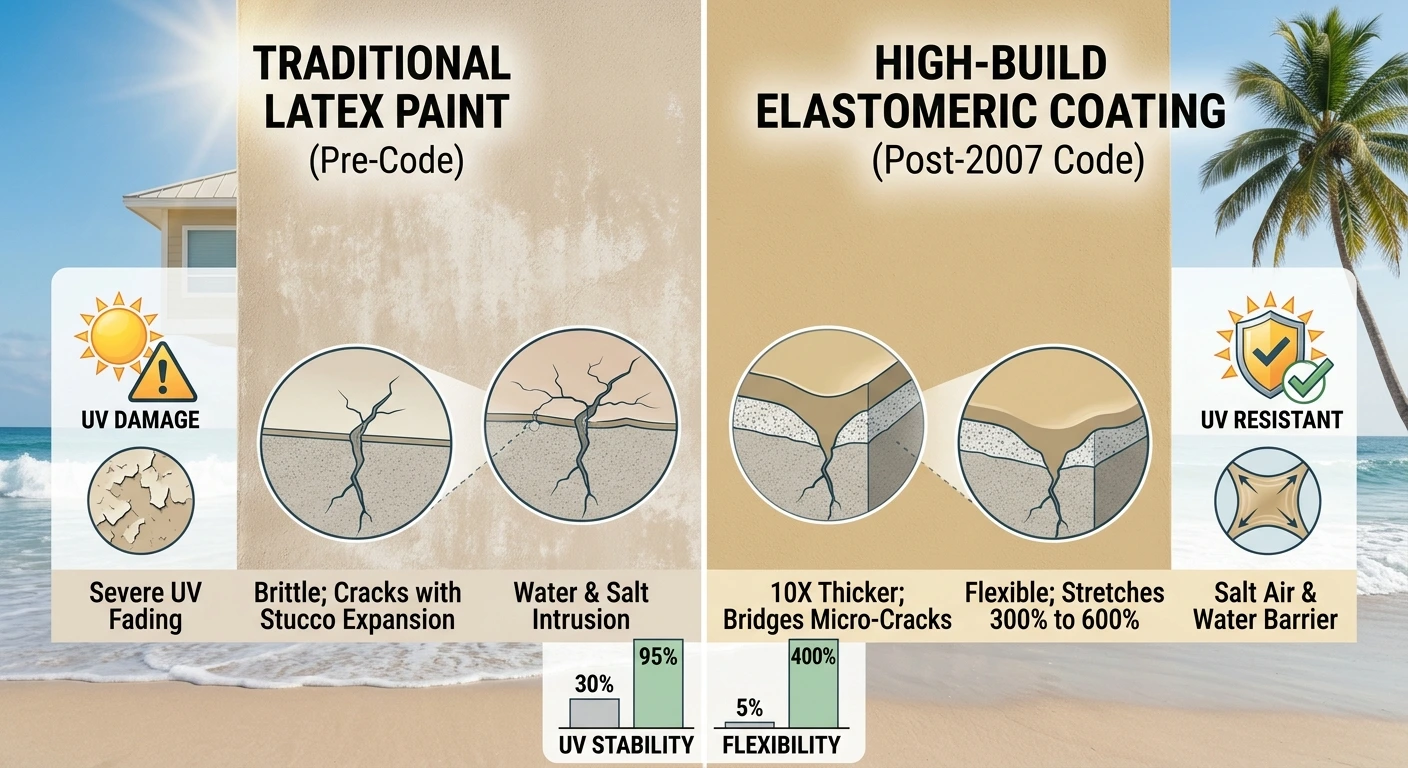
Elastomeric paint is a thick, flexible coating designed specifically to bridge masonry cracks, whereas 100% acrylic latex is a lighter, breathable paint best for homes without structural moisture issues.
Selecting the right paint formula determines whether your finish lasts 5 years or 15 years in coastal Florida environments.
Elastomeric Paint Benefits & Trade-Offs
Elastomeric coatings apply up to 10 times thicker than standard house paint. When cured, elastomeric paint can stretch up to 300% to 600% without breaking.
- Pros: Fills micro-cracks automatically, creates a completely waterproof shield against wind-driven rain, and offers superior salt-air resistance.
- Cons: Costs 40% to 60% more per gallon than acrylic paint. Requires strict professional application; if applied improperly over damp stucco, it can trap interior moisture and blister.
100% Acrylic Latex Benefits & Trade-Offs
High-end 100% acrylic paint (such as Sherwin-Williams Duration, SuperPaint, or Benjamin Moore Aura) remains the industry standard for most inland Florida residences.
- Pros: Excellent breathability, strong UV resistance, wide color selection, and easier application.
- Cons: Less elasticity; will not cover or flex over widening structural stucco cracks over time.
Local Coastal Rules, Salt Air & HOA Compliance
Florida coastal homes within 1,000 feet of salt water require corrosion-resistant hardware, UV-stable pigments, and strict adherence to local HOA color palettes.
Whether you live in Duval, St. Johns, or Hillsborough County, local regulations and environmental conditions directly impact your project timeline and material choices.
Coastal Salt Air & Corrosion Prevention
Salt air accelerates oxidation on exposed metal surfaces around your home's exterior.
When contractors prep your home, ensure they specify stainless steel or hot-dipped galvanized fasteners for light fixtures, shutters, and hose reels.
All exterior metal trim, flashings, and wrought iron railings must be wire-brushed, treated with a rust-inhibiting primer, and coated with marine-grade enamel.
HOA Approvals in Duval, St. Johns & Hillsborough Counties
If your home is in a master-planned community (such as Nocatee, Fleming Island, or FishHawk Ranch), you must submit an Architectural Review Committee (ARC) application before buying paint.
- Most Florida HOAs limit exterior wall choices to soft coastal neutrals (beige, gray, greige, sand).
- Accent colors for front doors and shutters must be selected from pre-approved community swatches.
- Unapproved color changes can result in fines of $100 per day or legal mandates to repaint the home at your expense.
3 Essential Questions to Ask Your Painting Contractor
Before signing an exterior painting estimate in Florida, verify these three critical points:
- "Are pressure washing, stucco patching, and a dedicated masonry primer included in the written itemized quote?"
- Why: Cheap bids cut costs by skipping primer and spraying thin coats of paint directly over dirty stucco.
- "What specific paint line and dry mill thickness will be applied?"
- Why: Ensure the contract specifies exact product names (e.g., Sherwin-Williams Loxon Primer + Duration Topcoat) rather than generic brand names.
- "Do you carry active General Liability insurance AND Workers' Compensation coverage?"
- Why: Florida law requires contractors to carry proper insurance. If an uninsured worker falls off a ladder on your property, you could be held liable.
Frequently Asked Questions (FAQ)
What is the best time of year to paint a house exterior in Florida?
The best time to paint a house in Florida is during the dry season, between late October and April. Temperatures are mild, humidity is lower, and afternoon rain showers are less frequent, allowing paint to cure properly.
How often do stucco homes need to be painted in Florida?
Stucco homes in Florida typically need to be repainted every 7 to 10 years. Homes located directly on the coast exposed to intense salt spray and direct sunlight may require repainting every 5 to 7 years.
How much extra does elastomeric paint cost compared to standard paint?
Elastomeric paint generally costs between $60 and $90 per gallon, compared to $45 to $65 per gallon for premium 100% acrylic paint. Because elastomeric paint applies much thicker, it covers fewer square feet per gallon, increasing total material costs by 30% to 50%.
Can you spray paint over wet or freshly repaired stucco in Florida?
No. Fresh stucco patches must cure for at least 7 to 14 days (or until pH levels drop below 10) before applying primer. Painting over damp stucco traps moisture inside the wall, leading to bubbling, blistering, and structural stucco damage.
Disclaimer: Sunstate Home Costs provides independent home improvement cost data, painting recommendations, and building code references. Material performance and local regulations vary by manufacturer and HOA jurisdiction. Always consult a licensed Florida painting contractor regarding specific property requirements.
Explore more local insights in our My Safe Florida Home Program Guide or review structural requirements in our Florida 25% Roof Replacement Rule Guide .