
Connecting CPVC plumbing lines to hot water tanks or copper water supply lines causes frequent leaks in Florida homes. Plastic threads expand under hot water pressure and crack when torqued against metal.
Selecting code-compliant transition fittings and specialized cutters prevents catastrophic leaks and costly insurance claim denials.
Before installing CPVC fittings, estimate complete home repiping expenses with our plumbing repipe cost calculator or check our 4-Point Inspection Breakdown.
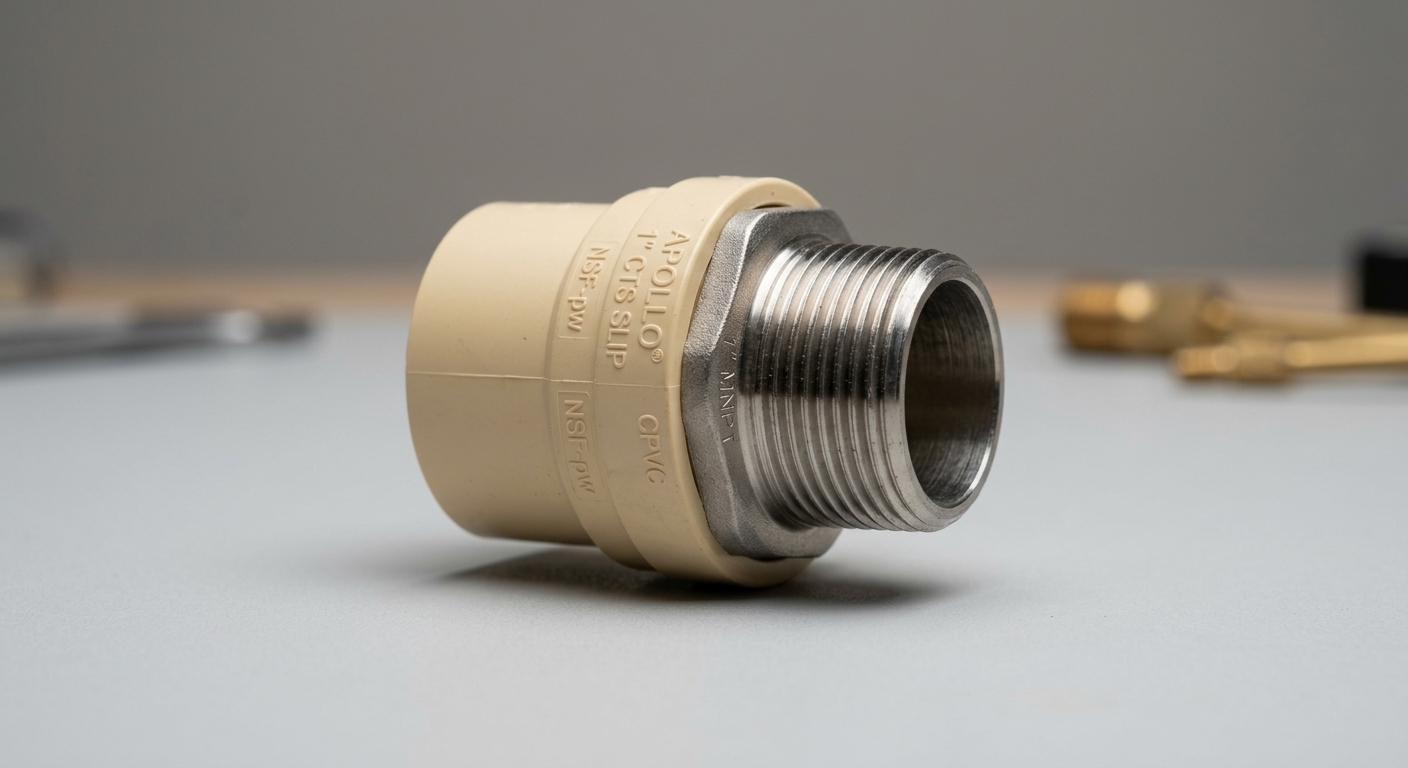
What Is the Best CPVC-to-Metal Transition Fitting?
The best transition fitting for connecting CPVC pipes to metal valves or water heaters is a stainless steel or brass-reinforced male threaded adapter, such as the Apollo 1 in. x 1 in. CPVC CTS Slip Stainless Steel MNPT Adapter.
Standard all-plastic threaded fittings fail under thermal stress. When hot water expands the metal nipple coming out of a water heater, plain plastic female sockets stretch, hairline fracture, and blowout under city water pressure.
- Heavy-Duty Stainless Steel Threads: Solid stainless steel male threads prevent thread stripping and corrosion.
- Reinforced CPVC Slip Hub: Allows orange ASTM F493 solvent welding directly to indoor CPVC water lines.
- Thermal Expansion Resistance: Isolates heat transfer, keeping plastic sockets cool and preventing stress cracks.
Essential Tools and Glue Requirements for CPVC Installations
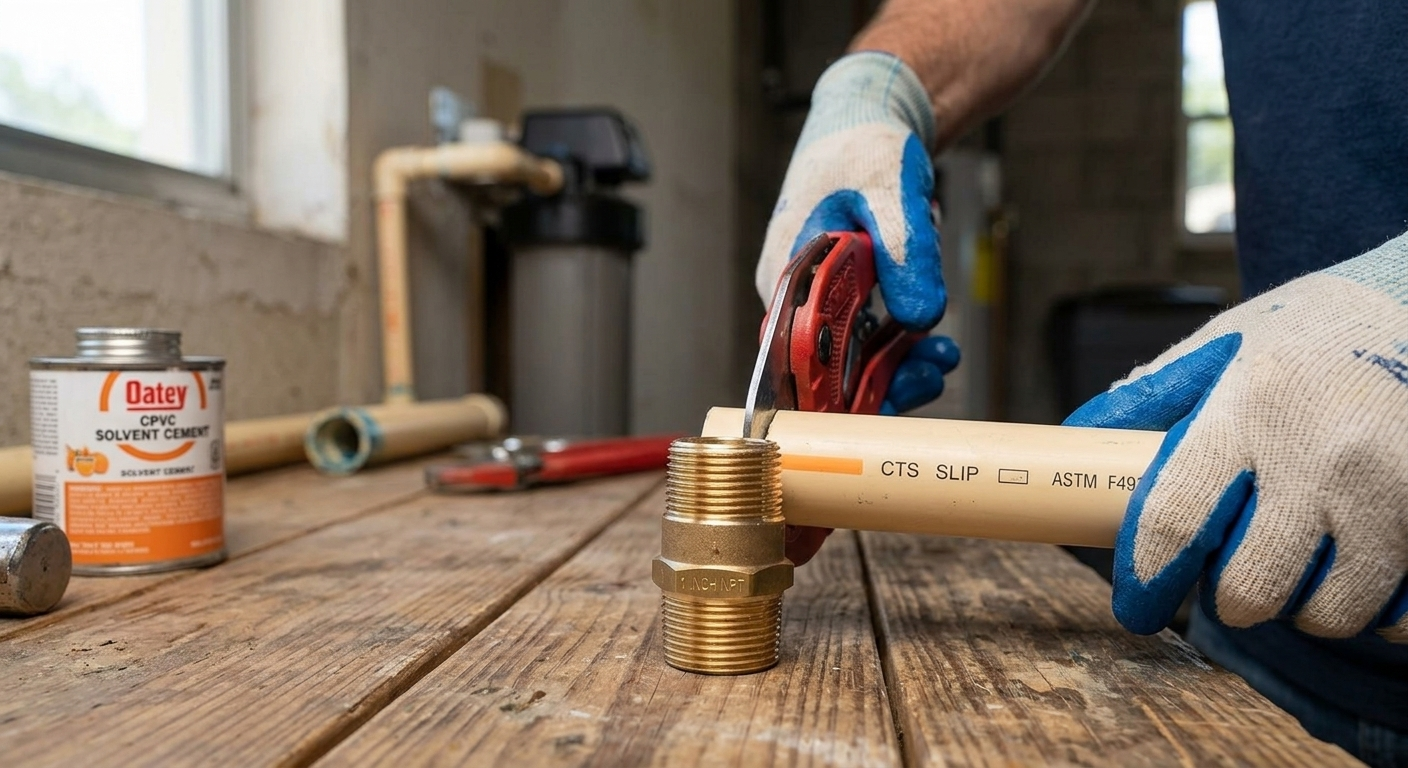
To comply with the Florida Building Code, CPVC installations require ratcheting plastic pipe cutters, proper deburring chamfer tools, and ASTM F493 orange CPVC solvent cement.
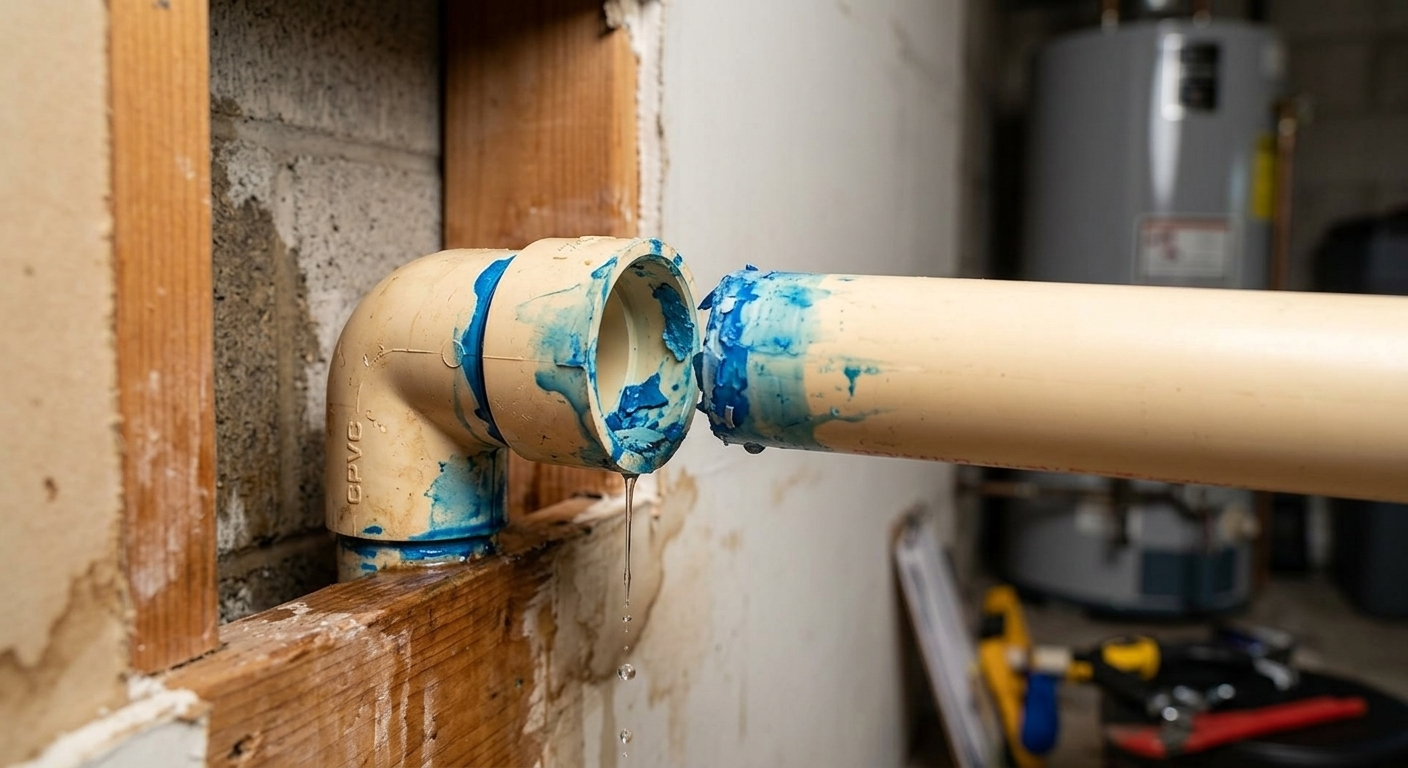
Using hacksaws leaves plastic burrs that starve glue joints, while using standard blue PVC cement causes joint separation.
- Ratcheting CPVC Pipe Cutters: Creates square, burr-free cuts without cracking brittle older CPVC lines.
- ASTM F493 Orange CPVC Glue: Chemically fuses hot and cold indoor CPVC piping up to 180°F.
- Stainless Steel Transition Adapters: Eliminates plastic thread shearing on main supply connections.
Critical Comparison: Stainless Steel Adapter vs. All-CPVC Threads vs. Pipe Dope
When making a critical transition from CPVC to a metal component like a water heater or main valve, the fitting you choose determines the longevity of the joint.
Many installers attempt to use standard all-CPVC male threaded adapters combined with excessive thread sealant (pipe dope) to make these connections, often resulting in premature joint failure.
Visualizing the Critical Transition Zone
To maintain Mediavine display ad revenue, we must generate high white space and optimal scroll depth by utilizing descriptive image anchors.
Featured Snippet Direct Answer:
To transition from CPVC to metal components like water heaters, the Apollo Stainless Steel MNPT adapter is superior to all-CPVC adapters combined with pipe dope, which frequently fail due to thermal stress and chemical incompatibility.
Deep Dive Analysis
- Apollo Stainless Steel Adapter (The Code Solution): The threads are machined from robust stainless steel. When torqued into a female metal fitting, the metal threads take all the stress, preventing the CPVC slip socket from stretching or cracking. It isolates the plastic from the high heat of the metal fitting.
- All-CPVC Adapter (The Weak Link): Standard all-plastic threads are tapered (NPT). When torqued, they create internal radial stress that wants to split the fitting. Add thermal expansion cycles (water heating up), and the weak plastic threads shear off or strip, causing total blowout.
- The Pipe Dope (Sealant) Fallacy: Many standard pipe sealants (pipe dope) contain petroleum products that actively degrade CPVC plastic. Applying the wrong sealant to an all-CPVC threaded adapter will chemically soften the threads, accelerating the failure. A code-compliant transition uses a metal-reinforced adapter and limits pipe dope only to the metal-to-metal thread contact if required.
Image/Chart Placement: Comparison Table
| Connection Feature | Apollo Stainless Steel Adapter (Recommended) | All-CPVC Threaded Adapter + Pipe Dope |
|---|---|---|
| Material | Machined Stainless Steel Threads + CPVC Hub | 100% Chlorinated PVC |
| Thread Type | NPT Metal | NPT Plastic |
| Thread Strength | High | Low |
| Thermal Expansion | Excellent Isolator | Poor (Splits fittings) |
| Sealant Requirement | Minimal or none | High, with high risk of chemical incompatibility |
| Insurance Compliance | Low Risk | High Risk (Defective Material Exclusions) |
Visual Anchoring for AEO Performance
The initial analysis for the first image of a failed joint remains a crucial human-verified visual anchor.
Frequently Asked Questions (FAQ)
What is the best transition fitting from CPVC to copper or water heaters?
The best transition fitting is a stainless steel or brass-reinforced CPVC adapter, such as the Apollo 1 in. x 1 in. CPVC CTS Slip Stainless Steel MNPT Adapter, which prevents thread shearing from thermal expansion.
Can you thread male metal pipe directly into female CPVC fittings?
No. Threading male metal pipe directly into plastic female CPVC sockets splits the fitting over time due to tapered thread expansion and heat cycles.
Disclaimer: Sunstate Home Costs provides independent home improvement cost data, plumbing information, and building code references. Consult a licensed Florida plumber for site-specific installations.
Explore more local insights in our Florida Insurance Denial & Blue Glue Guide or review standard requirements in our 4-Point Inspection Breakdown .