
A burst plumbing joint just flooded your Florida home. Water is pouring through your drywall, ruined floorboards are buckling, and your insurance adjuster is standing in the hallway taking photos.
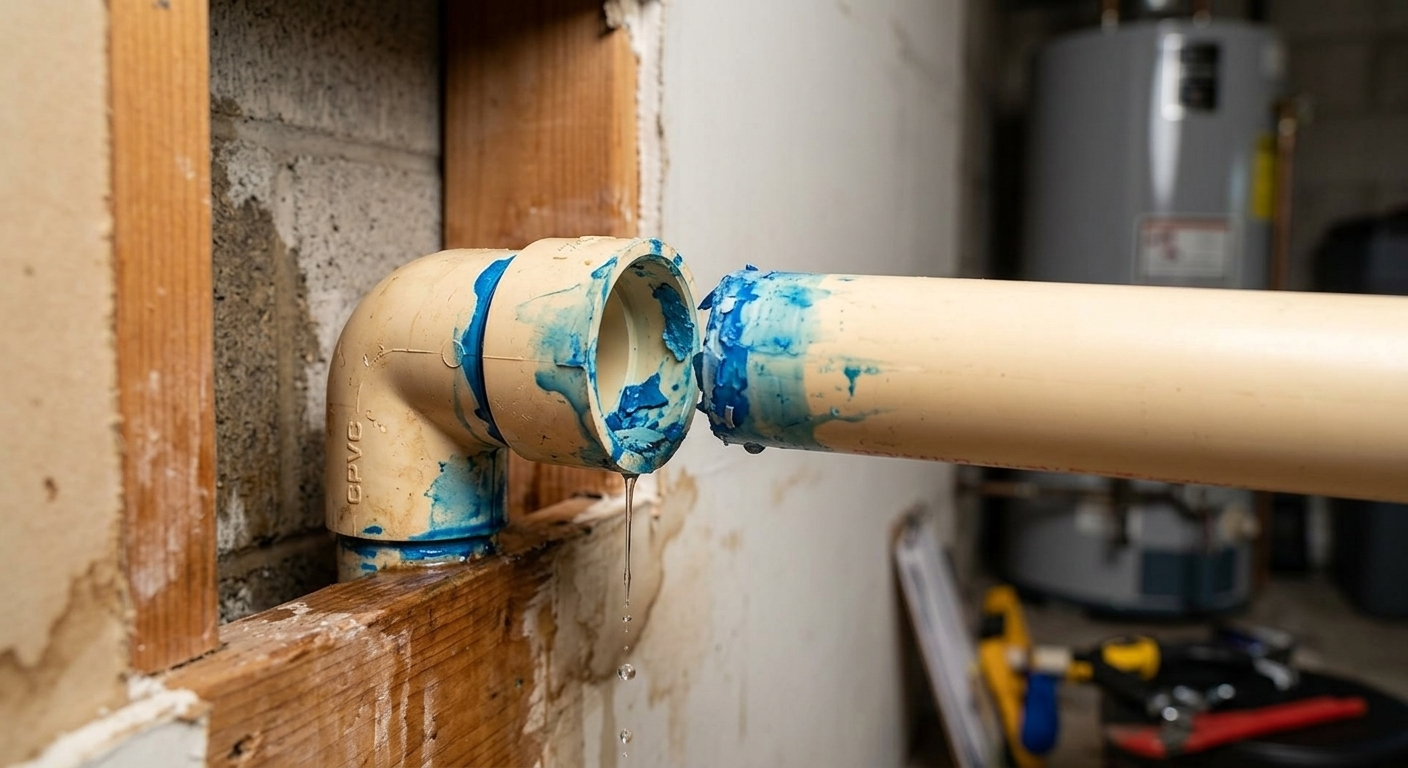
Then the adjuster points a flashlight at the failed pipe connection and sighs. You see a bright blue ring of glue smeared around a yellowed CPVC fitting.
That single container of handy blue glue from your garage workbench might have just wiped out your entire $40,000 water damage insurance claim. Here is why Florida insurers look for this exact mistake and how policy exclusions work.
Before jumping into code details, you can estimate full house repiping expenses with our plumbing repipe cost calculator or check our 4-Point Inspection Breakdown.
Will Insurance Deny Your Claim for Using Blue Oatey Cement on CPVC?
Yes, Florida homeowners insurance carriers routinely deny water damage claims when a plumbing joint fails due to using Blue Oatey PVC cement on CPVC piping.
Insurance adjusters classify using standard PVC glue on CPVC lines as "faulty workmanship" or "use of improper materials." Standard Florida home insurance policies contain explicit exclusions that reject coverage for damage caused directly by unapproved, non-code-compliant installations.
While home insurance covers sudden water discharges, it explicitly excludes the consequences of using incorrect chemicals that violate manufacturer guidelines and building codes.
Can You Use Blue Oatey Cement on CPVC Pipes?
No, you cannot use Blue Oatey Rain-R-Shine or standard blue PVC cement on CPVC pipes under any circumstances.
Standard PVC and CPVC are entirely different chemical polymers. Standard white PVC (polyvinyl chloride) handles cold water supply and drainage, whereas CPVC (chlorinated polyvinyl chloride) undergoes an extra chlorination reaction that allows it to withstand higher temperatures and working pressures.
Blue Oatey PVC glue does not contain the specific solvent blend required to soften and chemically weld CPVC material. Instead of fusing the plastic together, blue glue acts like a temporary surface glue. Over time, household water pressure pushes the pipe right out of the fitting.
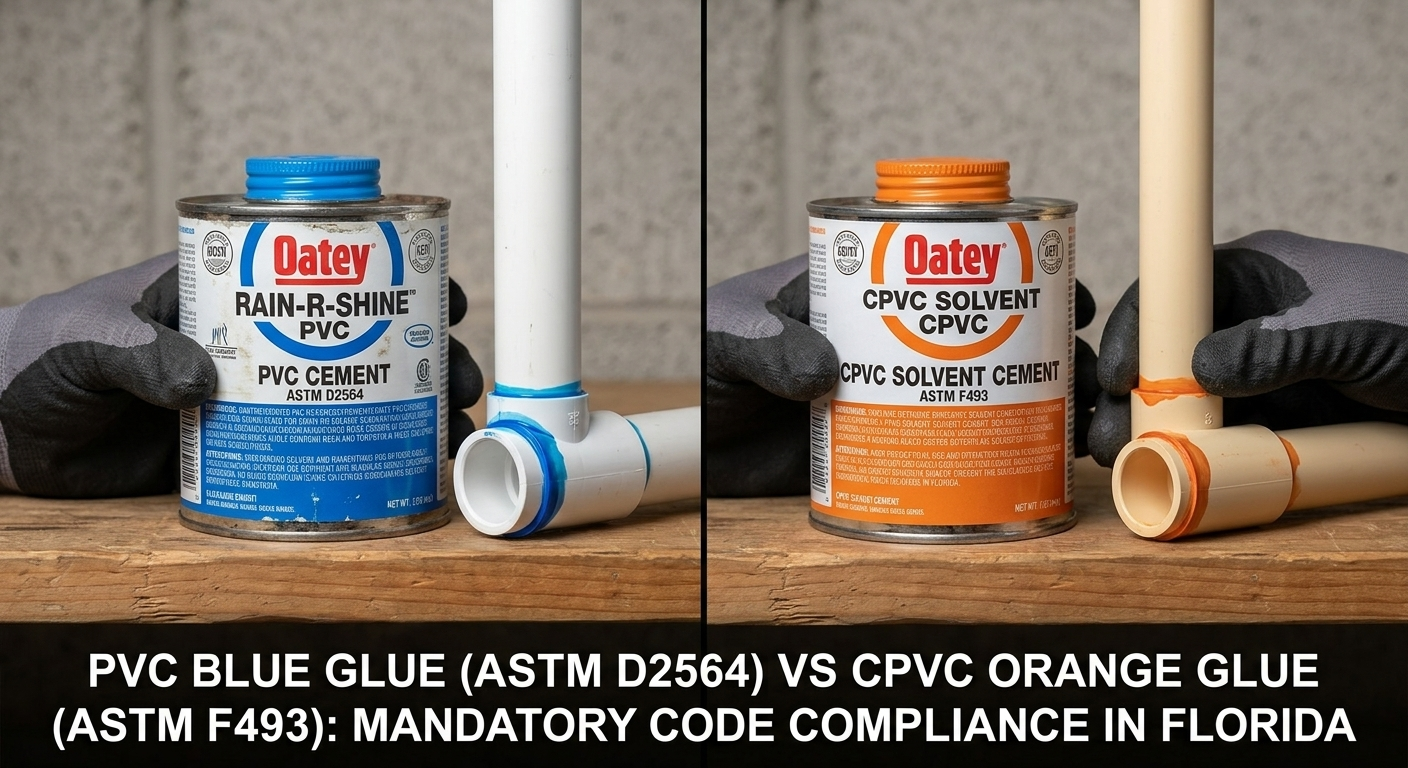
- Standard Blue PVC Glue: Formulated exclusively for PVC pipe joints. It sets rapidly in wet conditions but lacks CPVC-softening solvents.
- Orange or Yellow CPVC Glue: Formulated with heavy-bodied chemical solvents meeting ASTM F493 standards. It chemically fuses CPVC pipes for hot and cold pressurized water lines.
You can cross-reference regional property compliance guidelines using our Florida Wind Mitigation Inspection Guide.
Code-Approved Transitions: Metal-to-CPVC Stainless Steel Adapters
To connect plastic CPVC pipe safely to metal water heaters, valves, or copper lines without chemical glues or thermal expansion stress, the Florida Building Code specifies metal-to-plastic transition fittings.
One of the most frequent failure points in Florida indoor plumbing occurs where CPVC connects directly to metal threads. Straight plastic-to-metal threaded connections warp under thermal expansion cycles when hot water flows.
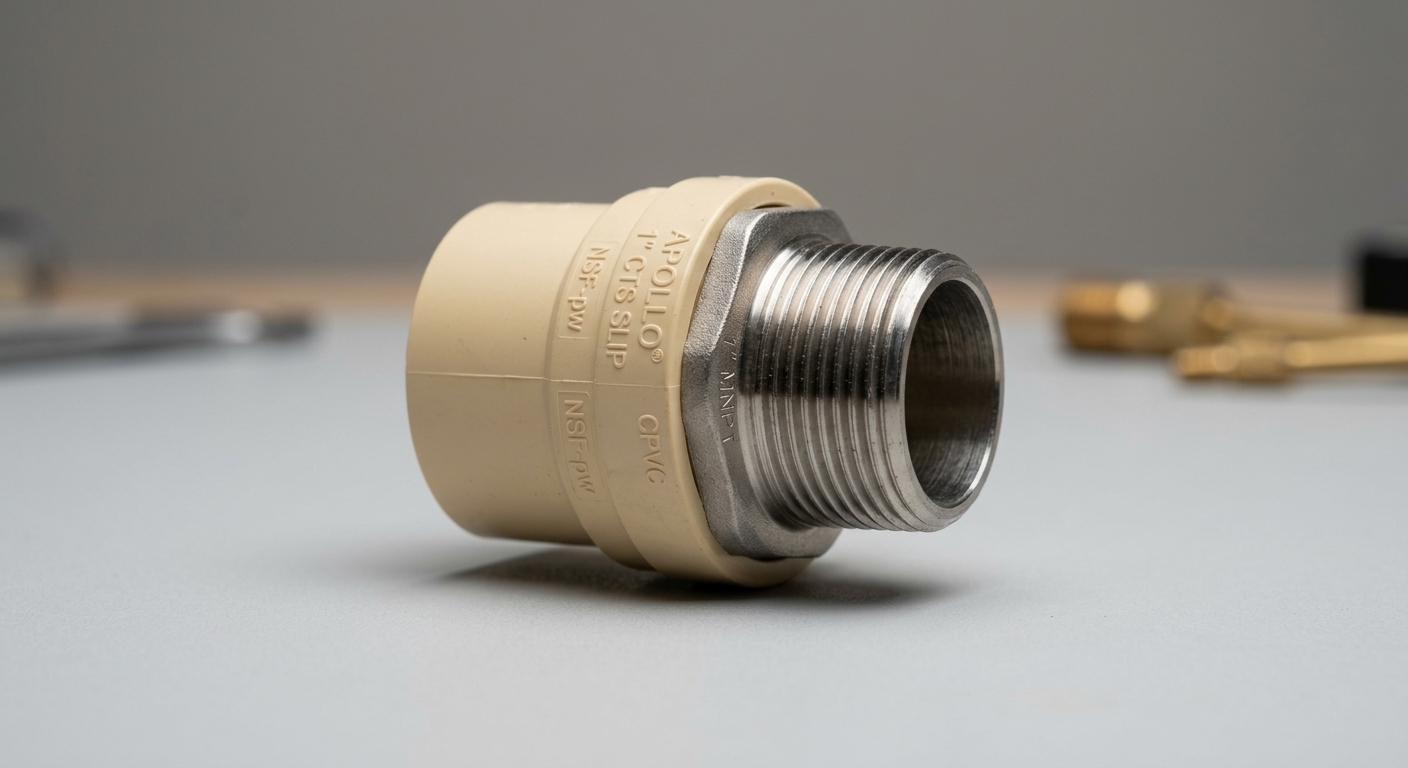
Using specialized transition adapters like the Apollo 1 in. x 1 in. CPVC CTS Slip Stainless Steel MNPT Adapter eliminates glue contamination and thread stripping altogether.
- Heavy-Duty Stainless Steel Threads: The male NPT threads are machined from corrosion-resistant stainless steel, preventing overtightening cracks.
- Solvent-Weld CPVC Socket: The female slip socket allows proper ASTM F493 orange CPVC solvent welding on the plastic side.
- Thermal Stress Prevention: The metal core absorbs line heat from water heaters before thermal energy reaches the CPVC socket.
Florida Building Code Rules: CPVC Orange Glue vs. Blue PVC Glue
The Florida Building Code (Plumbing Section 605.14.2) mandates that all CPVC solvent joints must strictly comply with ASTM F493 standards, rendering blue PVC glue a direct code violation.
When an insurance investigator examines a major water loss in Jacksonville, Tampa, or Miami, they verify whether the plumbing installation met code when installed.
In municipal jurisdictions across Duval, Orange, and Hillsborough counties, building inspectors verify solvent color coding during rough-in inspections.
Chemical & Code Standards: PVC vs. CPVC Solvents
| Pipe Material | Applicable ASTM Standard | Correct Solvent Cement Color | Approved Temperature & Usage | Insurance Code Compliance |
|---|---|---|---|---|
| Standard PVC | ASTM D2564 | Clear, Medium Gray, or Blue | Cold water pressure & DWV drain lines only | Compliant for PVC only |
| CPVC (FlowGuard Gold) | ASTM F493 | Orange, Yellow, or One-Step Heavy-Bodied | Hot & cold indoor potable water (up to 180°F) | Mandatory for CPVC |
| CPVC-to-Metal Adapters | ASTM F493 / Threaded NPT | Orange Glue + Stainless Steel Threads | Water heater feeds & main water meters | Code Compliant & Approved |
If your contractor or handyman used blue Oatey Rain-R-Shine on CPVC, the joint fails the ASTM F493 requirement. The insurer uses this code breach to prove improper plumbing installation.
To calculate repiping costs in your local area, check our Jacksonville plumbing cost estimator.
How Insurance Adjusters Spot CPVC Solvent Weld Failures
Adjusters and forensic engineers easily spot improper solvent usage because blue PVC cement leaves a bright color indicator that separates cleanly from CPVC fittings without chemical fusion.
Proper solvent welding actually melts the two plastic surfaces together into a single unified piece. When you cut open a proper orange-glued CPVC joint, you cannot see a seam between the pipe wall and the socket.
When an adjuster inspects a blue-glued CPVC failure, they notice three distinct warning signs:
- Bright Blue Ring Indicator: Blue Rain-R-Shine glue leaves an undeniable, highly visible stain right at the joint hub.
- Smooth, Unfused Surfaces: The pipe pulls cleanly out of the fitting socket. The CPVC surface remains smooth rather than melted or pitted.
- Flaking Glue Residue: The dried blue glue chips off in brittle flakes rather than forming a fused structural bond.
Once the carrier's forensic engineer notes "joint separation due to unapproved solvent application," the legal team issues a formal denial letter under the policy's defective workmanship clause.
What Does Your Florida Home Policy Actually Exclude?
Florida homeowners insurance policy forms (such as HO-3 and HO-6) exclude water damage resulting from faulty design, defective materials, or improper maintenance.
Carriers rely on standard policy exclusion language to turn down claims involving incorrect pipe glues.
"We do not insure for loss caused directly or indirectly by faulty, inadequate, or defective workmanship, repair, construction, renovation, or materials used in repair or construction."
If a licensed plumber installed the wrong glue, your insurance company will deny your claim and instruct you to file a claim against the plumber's commercial general liability policy.
If you or a previous DIY owner installed the wrong glue, the carrier denies the claim outright, leaving you responsible for 100% of the water remediation and structural restoration costs.
What Should You Do If You Find Blue Glue on Your CPVC Pipes?
If you spot blue glue on your indoor CPVC lines, hire a licensed Florida plumber to cut out and replace the affected fittings before a high-pressure blow-out occurs.
Many Florida homes built or remodeled between 1990 and 2010 contain CPVC lines where eager DIYers or unlicensed handymen used whatever glue was sitting in their truck.
- Inspect Exposed Lines: Look under sinks, around water heater connections, and near main shutoff valves for blue glue rings on tan/yellow pipes.
- Avoid Stressing the Joint: Do not twist, shake, or hang items from CPVC lines showing blue glue stains.
- Repipe Problem Sections: Have a plumber replace those sections with proper orange-glued CPVC, stainless steel transition adapters, or modern crimped PEX fittings.
- Document Professional Repairs: Keep invoices proving a licensed plumber handled the updates. This provides proof of proper maintenance if you ever face a future water claim.
Frequently Asked Questions (FAQ)
Can you use blue Oatey cement on CPVC pipe in Florida?
No. Blue Oatey Rain-R-Shine PVC cement is formulated specifically for standard PVC pipes and lacks the necessary chemical solvents to fuse CPVC. Using it on CPVC violates ASTM standards and the Florida Building Code.
Will insurance deny a claim for wrong plumbing glue in Florida?
Yes. Florida homeowners insurance carriers routinely deny water damage claims citing policy exclusions for faulty, inadequate, or defective workmanship and materials when an improper solvent cement causes a pipe joint failure.
What is the difference between CPVC orange glue vs blue PVC glue?
Blue PVC glue melts standard PVC at room temperature for cold-water irrigation or drain lines. Orange CPVC glue contains extra chemical solvents designed to handle higher heat and pressure ratings required for indoor hot and cold water distribution.
Does Florida home insurance cover CPVC plumbing leaks?
Florida policies generally cover sudden and accidental water discharges from age-related CPVC pipe bursts. However, they explicitly exclude damage resulting from improper installation, wrong glues, or long-term unaddressed seepage.
Disclaimer: Sunstate Home Costs provides independent home improvement cost data, plumbing information, and building code references. Insurance policy terms and coverage decisions vary by carrier, endorsement, and local jurisdiction. Always consult a licensed Florida public adjuster or legal professional regarding specific insurance claims.
Explore more local insights in our My Safe Florida Home Program Guide or review standard requirements in our 4-Point Inspection Breakdown .