
Pool plaster rough, stained, or peeling in the Florida sun? You are ready to update your backyard oasis.
Before hiring a contractor, one big question pops up: do local building departments require permits for a simple replaster?
Getting this wrong can result in stop-work orders or fines. Let us look at what Florida code actually demands.
Before diving into local rules, you can test your project numbers using our pool resurfacing cost calculator or check our 4-Point Inspection Breakdown.
Do You Need a Permit for Pool Resurfacing in Florida?
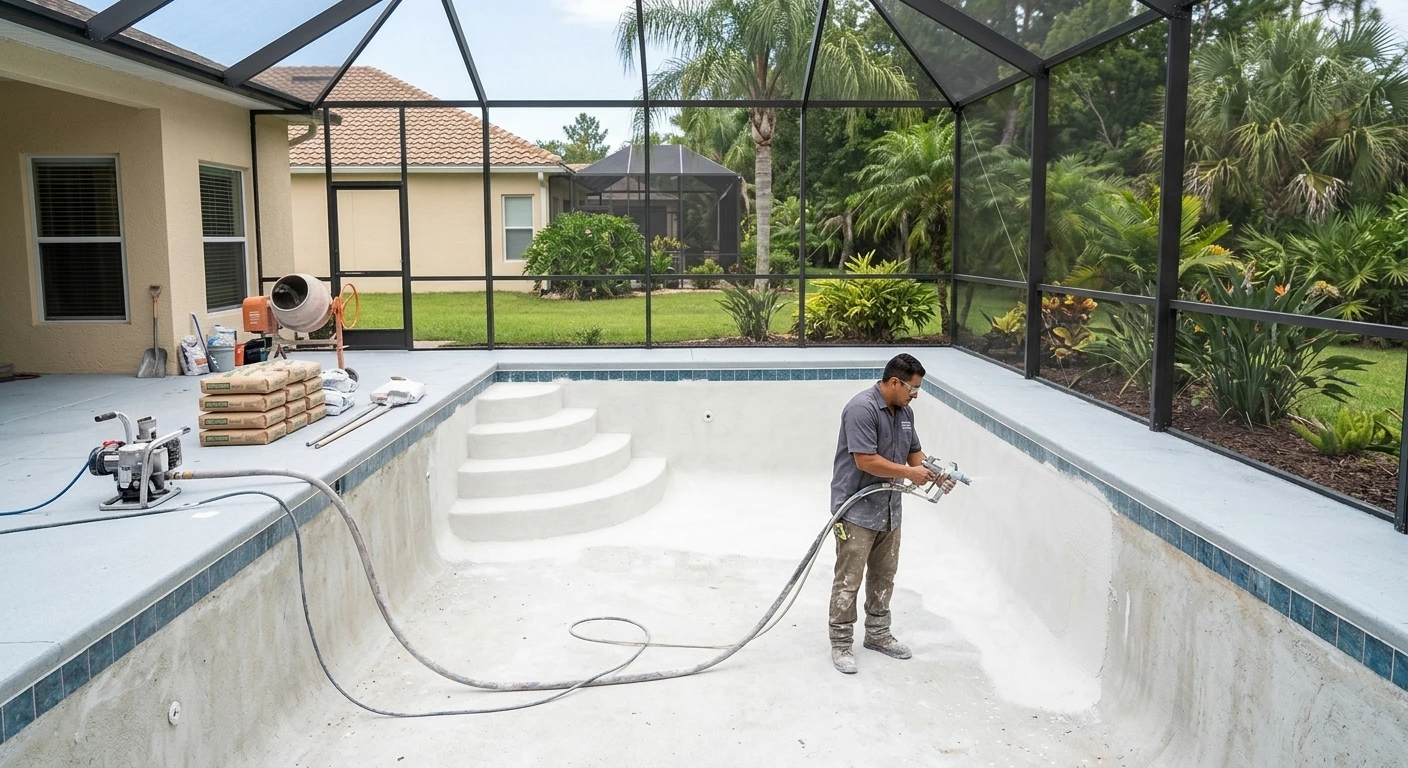
No, standard cosmetic pool resurfacing like replastering, marcite application, or swapping tile does not require a building permit in most Florida municipalities.
Building departments across Jacksonville, Orlando, and Tampa classify interior surface refinishing as routine maintenance. As long as you are not changing the pool's structural shell, depth, or plumbing layout, you can bypass the permit office.
However, the moment your project crosses into structural repairs or electrical updates, county rules change instantly.
When Does Pool Remodeling Trigger a Permit?
Any work involving structural shell repairs, gas line installations for heaters, or electrical bonding upgrades requires a formal municipal building permit in Florida.
Homeowners often assume a full backyard makeover falls under a single umbrella. In reality, individual scopes dictate permit triggers.
- Structural Repairs: Fixing major concrete cracks or gunite shell degradation requires structural engineering sign-offs.
- Gas Heaters & Lines: Installing or replacing natural gas pool heaters requires mechanical and gas permits.
- Lighting & Bonding: Upgrading underwater pool lights or repairing the electrical bonding grid triggers mandatory electrical permits.
You can cross-reference property compliance rules with our Florida Wind Mitigation Inspection Guide.
Jacksonville & Duval County Specific Regulations
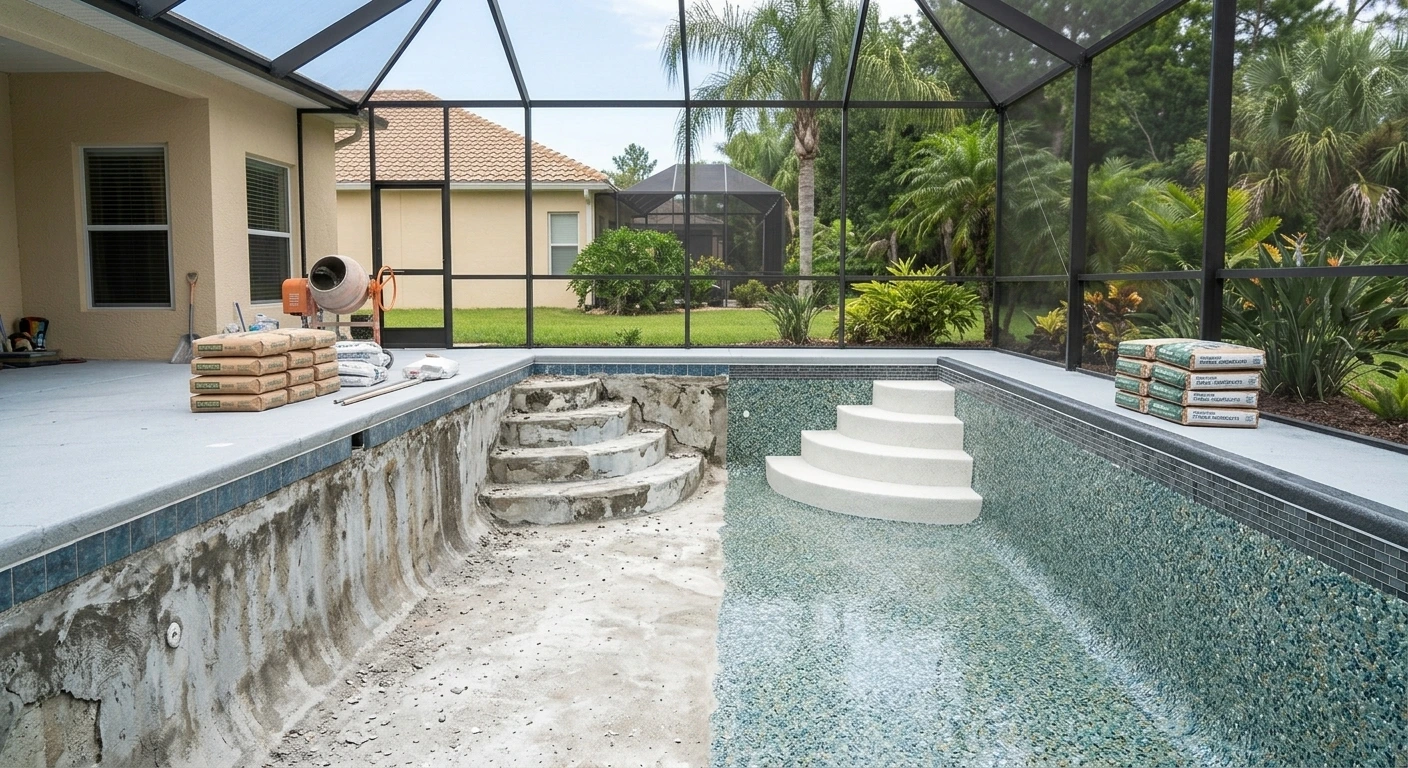
Duval County building inspectors do not require permits for interior pool plastering, but local contractors must hold active Florida DBPR licenses.
When researching does duval county require permit for pool resurfacing, local code confirms that surface finish coats are exempt. That said, always verify your builder's credentials. Unlicensed subcontractors cannot legally handle chemical acid washes or structural tile lines in North Florida.
Cost Breakdown for Jacksonville Pool Resurfacing
| Pool Finish Type | Lifespan | Estimated Jacksonville Cost (14,000 Gal) | Permit Required? |
|---|---|---|---|
| Standard Marcite | 7 – 10 Years | $4,500 – $7,000 | No |
| Quartz Aggregate | 10 – 15 Years | $7,500 – $11,000 | No |
| Pebble Finish | 15 – 20+ Years | $10,000 – $16,000 | No |
| Structural Re-shell / Spall Repair | 20+ Years | $12,000 – $25,000+ | Yes |
To estimate your exact regional expenses, try our Jacksonville pool resurfacing calculator.
Frequently Asked Questions (FAQ)
Does Duval County require a permit for pool resurfacing?
No. Standard cosmetic pool resurfacing like replastering, marcite, or pebble finishes does not require a building permit in Jacksonville or Duval County as long as structural shell work or electrical bonding is untouched.
When does pool remodeling trigger a permit in Florida?
You need a permit in Florida if your project involves structural shell repairs, changing the pool shape, replacing pool gas heaters, or altering the electrical bonding grid and pool lighting circuits.
What is the cost to replaster a pool in Jacksonville, FL?
The average cost to replaster a standard residential pool in Jacksonville ranges from $5,000 to $12,000, depending on the surface material (marcite, quartz, or pebble) and total square footage.
Disclaimer: Sunstate Home Costs provides independent home improvement cost data and contractor insights. Municipal permit requirements and building codes are subject to local ordinance updates by city and county building departments. Always verify requirements with your local zoning office before beginning work.
Explore more local insights in our My Safe Florida Home Program Guide or review standard requirements in our 4-Point Inspection Breakdown .